
Halloween Chills and the Compromise of 1877 in the Trillium Lobby!
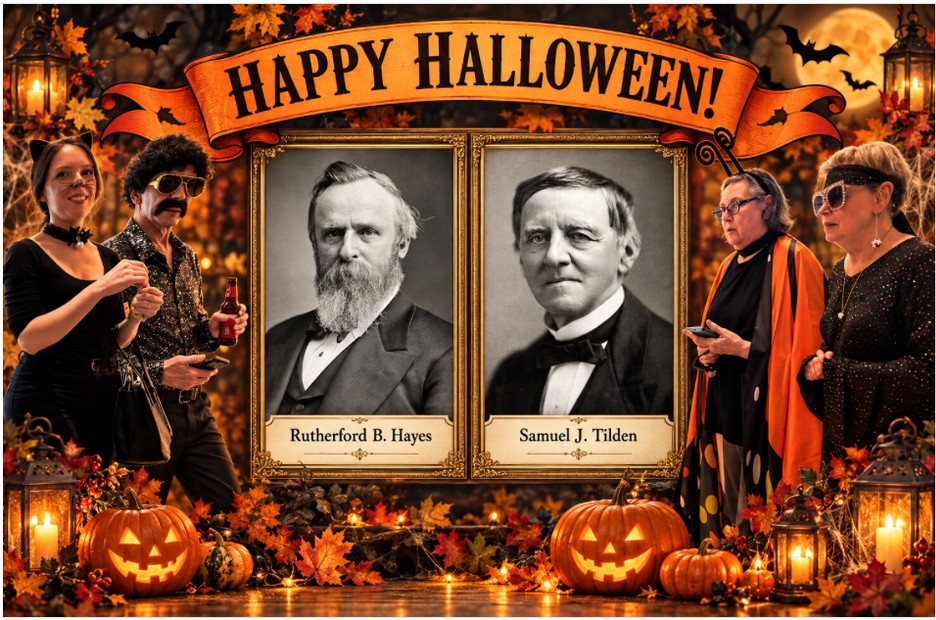
Three days remain (after this one) before the election, and the hysteria is approaching what feels like unprecedented levels.
It prompted Vic to hold his tablet up, positioning the illuminated screen in the hands of the dummy deceased waiter.

“You think this one is bad? Remember 1876? Democrat Samuel Tilden versus Republican Rutherford B. Hayes?”
Deirdre and Holly both claimed to remember Mr. Hayes—or at least his name from the row of Presidents in their textbooks.
There is more to recall as emotions rise through the remaining days and whatever aftermath awaits us.
There is precedence for that, anyway. Back In the Presidential election of 1876, Tilden won the popular vote but ultimately lost the Electoral College by a single vote, 185 to 184. Twenty electoral votes were disputed across four states: Florida, Louisiana, South Carolina and, somewhat inconveniently for a purely Southern story, Oregon.
We have forgotten the times. Scandals had battered President Grant’s Republican administration. Federal troops still protected the remaining Reconstruction governments in parts of the South. Fraud, violence and intimidation—particularly against Black voters—shadowed the election.
Congress created an Electoral Commission, which awarded all twenty disputed votes to Hayes. The constitutional crisis dragged into March 1877.
Then came the political understandings commonly called the Compromise of 1877. The familiar account holds that Southern Democrats accepted Hayes in exchange for the withdrawal of federal protection for the remaining Republican state governments in the South. Historians still debate whether there was a single binding bargain.
The consequences were less ambiguous. Hayes withdrew troops from their positions protecting the Louisiana and South Carolina state governments. Reconstruction ended, and the retreat from protecting Black citizenship helped open the way to decades of disenfranchisement, segregation and Jim Crow abuses.
The Presidency was settled. The damage to American civil liberties endured far longer.
We are determined to remember—and to don our colorful garb again today as we plow forward into the hours of darkness, when little thieves are supposed to appear demanding candy.
Later, someone will turn the clocks back.
Is “back” to the left or the right?

We would have to ask Mr. Tilden.
Copyright 2026 Vic Socotra
www.vicsocotra.com
