
Holly’s Autumn Olive
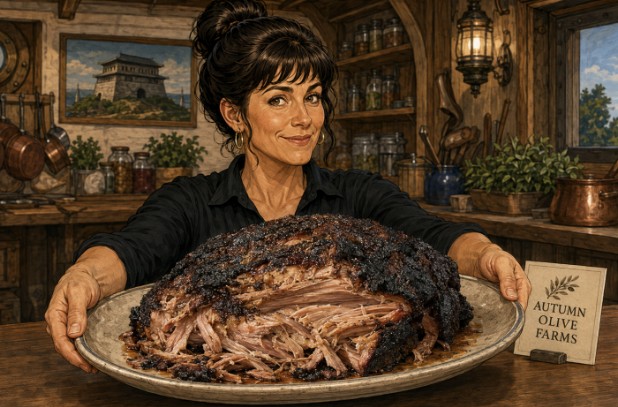
Slow-Cooked Pork Butt
Hi, Gang! Holly here, with a chance to start a new week in a new month—and to bring you one of the fine pork projects I have been working on whenever Deirdre spins that arrow thingie around.
I served as a consultant to Rocket when he did that hot-dog project and stumbled across the fact that America’s largest pork producer had been acquired by a company based in China.
Considering the recent reports of Iranian-affiliated hacking attempts against municipal water systems, we think it may be time to start paying closer attention to our food supply and the logistics that keep it moving.
That is why I went out to the Shenandoah Valley to visit one of the finest pork producers in the tri-state area:
I will have a more complete assessment of the Autumn Olive operation in the future. There is one fellow out there who I think seems particularly interesting, and there is a major event celebrating Virginia’s liquid heritage coming next month.
Autumn Olive is an impressive family operation whose porcine products are served at such distinguished establishments as The Inn at Little Washington, The Dabney and Tail Up Goat. More important, the farm is helping preserve heritage breeds whose remarkable qualities have largely disappeared from commodity agriculture.
Most impressive is the farm’s commitment to raising healthy, contented pigs. You can visit them near Waynesboro and see for yourself.
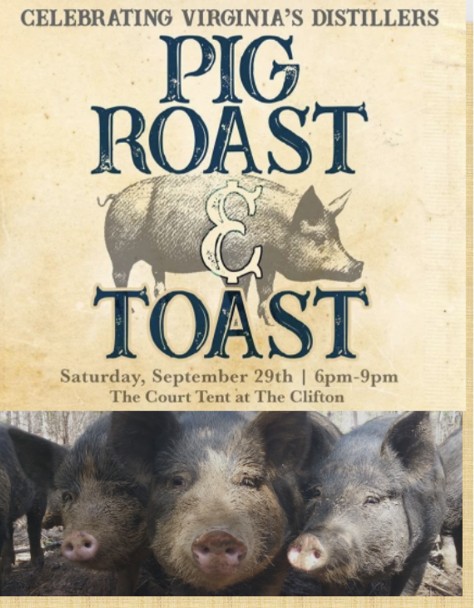
And if you are contemplating a September sojourn into the Valley, perhaps we will see you at the Pig Roast on Saturday, September 29. It will be our way of celebrating good food, good drink and the approach of harvest season in one of America’s great places.
Ingredients
Serves a crowd of 20—with sides
1 bone-in pork shoulder roast, 8 to 10 pounds
Applewood chips or pellets
3 tablespoons spicy brown mustard
¼ cup all-purpose meat seasoning—or my favorite, Happy Mama’s Happy Sprinkles
⅓ cup apple cider or apple juice
3 tablespoons cider vinegar
Directions
Let the roast stand at room temperature for one hour. Preheat the smoker to 275°F. Add the applewood chips or pellets according to the manufacturer’s directions.
Trim away the excess fat, leaving a reasonable exterior layer. Pat the roast dry, coat it with the mustard and apply the seasoning generously.
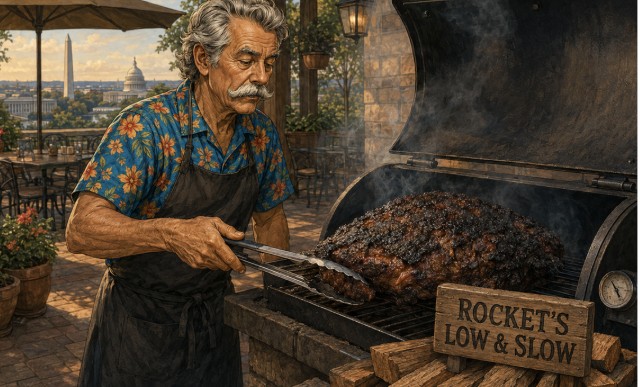
Hand the platter to Rocket and tell him to take it down to the patio and put the pork in the Weber on smoker mode.
Send down a spray bottle containing the apple cider and vinegar. Have Rocket lightly spritz the pork and continue smoking it, spritzing once every hour, until the internal temperature reaches 165°F and the exterior has developed a dark mahogany bark. That should take about five hours.
Open the window and yell down to Rocket. Tell him to transfer the pork to a 13-by-9-inch baking pan or a large cast-iron skillet. Spritz it liberally with the cider mixture, cover it tightly with foil and return it to the smoker.
Continue cooking until the pork reaches the desired degree of tenderness:
For sliced pork: 190° to 195°F, approximately two to three additional hours.
For pulled pork: 200° to 205°F.
Remove the pork from the smoker and let it rest, still covered, for 45 to 60 minutes.
For sliced pork, cut around the bone and carve the roast across the grain. For pulled pork, remove the bone and shred the meat. Skim the fat from the cooking juices and toss the pork with the remaining juices before serving.
Nutrition
Per ½-cup serving: 186 calories; 11g fat, including 4g saturated fat; 67mg cholesterol; 548mg sodium; 0g carbohydrate; 19g protein.
The Sides
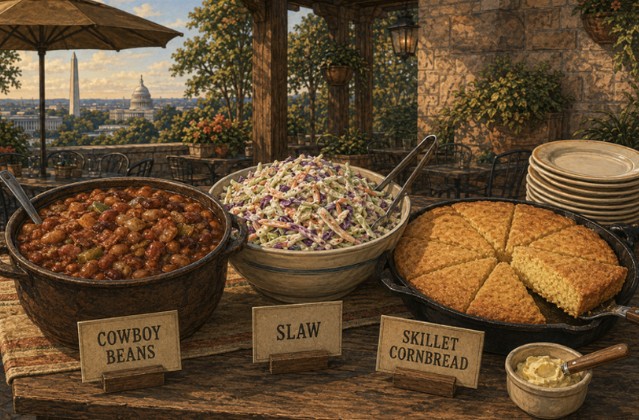
While Rocket was tending the smoker, I prepared the supporting cast:
Cowboy beans
Fresh slaw
Skillet cornbread
Plenty of butter
These were finished before Vic got to the bottom of his first mimosa—and before Rocket had finished resting the pork butt.
Enjoy!
Copyright © 2026 Vic Socotra
www.vicsocotra.com
