
Maybe a Smaller Persia…
Fog, Bagels, and the Shape of What Comes Next
There was a little friction at the Morning Production Meeting.
Not confusion exactly—just the mild turbulence that comes when three different generations show up early, push through the fog, and gather around a conference table with bagels and incomplete information about a war.
Frank had dropped off the bagels on his way up Leesburg Pike to the chapel to prepare for services tomorrow. Rocket arrived with a sack of croissants from Lily’s Chocolate and Coffee in Vienna. Jars of jam, preserves, and cream cheese were spread down the table beside the Field Service jug of Flat Yank coffee.
From the kitchen came the unmistakable rattle of pans. Deirdre appeared to be working on something with the leftover stocks from the deviled-egg festival she had orchestrated mid-week. The people hoping for something warm held off.
The Boomers gnawed on bagels.
Across the table, Creative Section Leader Miles watched them with mild amusement. The Boomers had finally become comfortable with the idea that B-52 bombers were flying from North Dakota to Persia, dropping their loads on pre-programmed targets, tanking at Diego Garcia or Akrotiri, and then heading back to North Dakota for dinner.
CENTCOM imagery now shows the strikes unfolding as a systematic, almost routine process. One target after another disappears from the list. The opposition has been minimal.
But there was a surprise waiting that morning.
And a hint of what the settlement might look like when the shooting stops.
No word of surrender has emerged yet, despite the President’s assurance that the campaign will require only four or five more weeks of combat operations. At the same time, reports circulate that the 82nd Airborne Division has been placed on alert for what officials describe as “limited and transitional” operations.
In other words—nothing to worry about.
We are beginning to glimpse some of the complexities as the weekend arrives and the clocks prepare to spring forward tonight.
The question in the room is no longer when.
The question is how long.
Just after the morning alarms sounded, confirmation arrived that Esmail Qaani, commander of the Iranian Revolutionary Guard Corps’ Quds Force, had in fact been working for Israeli intelligence.
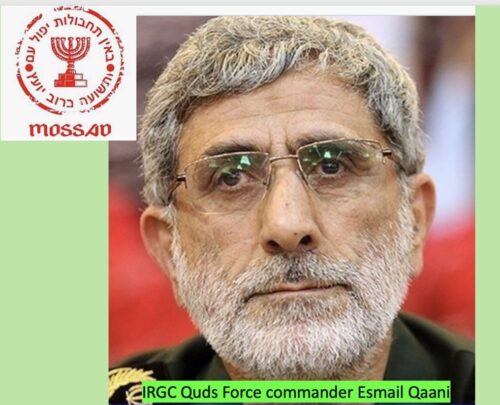
The revelation—confirmed overnight by Israeli sources—sent a quiet ripple down the table. According to those reports, Qaani was extracted safely and is now beyond the reach of the hard-line zealots he had served throughout his career inside the Iranian system.
It is only one of several extraordinary stories emerging now that the opening phase of the war has passed.
We are not pretending to be experts here in Fairfax, despite some accumulated regional experience dating back to the fall of the Shah in 1979. But one possibility being discussed openly is the potential role of the exiled Crown Prince, the Shah’s son, as a transitional figure—someone with enough name recognition to help guide a move toward free elections.
Not a new Supreme Leader.
Just a bridge.
That was why the Socotra Legal Team had insisted on addressing the morning meeting.
Carl was the one they sent.
A former Judge Advocate from his active-duty days, Carl still carries himself with the quiet authority of someone accustomed to explaining complicated things to impatient people. He stood at the north end of the conference room with a tablet loaded with PowerPoint slides.
Fog swirled outside the wall of glass behind him.
“I want to make one thing clear,” Carl said, holding the tablet high. “We are not going to start claiming this whole operation belongs to the Israelis. We’re going to stay calm, nod politely, and say it will likely be over in a couple of weeks.”
He paused and looked down the table.
“And those paratroopers who just went on alert are not the leading edge of another endless war.”
A few Boomers chuckled.
Splash waved a hand.
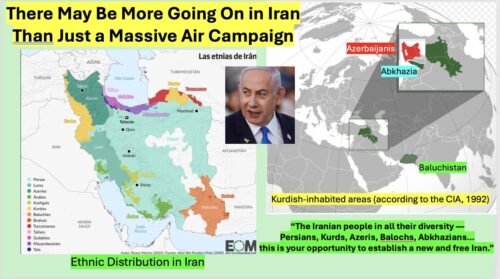
“What about what Prime Minister Netanyahu said in his press conference?” he asked. “He addressed the people of Iran directly and said they were not Israel’s enemies. Anyone who surrendered their weapons would be safe.”
“That’s what they’re saying here as well,” Miles replied. “But there was more to it than that. Some people think the message was aimed at something bigger.”
Carl clicked the remote.
A bright slide appeared on the screen behind him—two maps and a block of text.
One showed the ethnic distribution across Iran.
The other highlighted Kurdish-inhabited regions across the Middle East.
Carl read from the text.
“The Prime Minister said the people of Iran—in all their diversity—Persians, Kurds, Azeris, Balochs, and others—now have an opportunity to establish a new and free Iran.”
The room grew quiet.
“So,” someone asked finally, “is that a call to dismantle the old structure? To break the system that’s held all those groups under Tehran’s authority since the revolution?”
“We’ve already heard reports that Iraqi Kurds crossed the border to link up with relatives,” another voice said.
“They deny it today,” Carl replied.
There was a pause.
Miles stood and wandered toward the galley to see if Deirdre might be producing something warm.
“Take a look at that map,” he said, gesturing back toward the screen. “People all over the world are studying maps this morning.”
He shrugged.
“There are Kurdish patriots and Baluchi nationalists who might find the future very interesting.”
Another silence settled over the table.
“There might be a much smaller Persia when this is over,” someone said.
“And a lot of people who won’t have to answer to Tehran anymore.”
Miles pushed open the galley door.
“Take your destiny into your own hands,” he said over his shoulder, echoing the Prime Minister’s words.
Then he peered inside.
“Let’s see what Dee might be thinking about for lunch.”
Copyright 2026
Vic Socotra
www.vicsocotra.com
